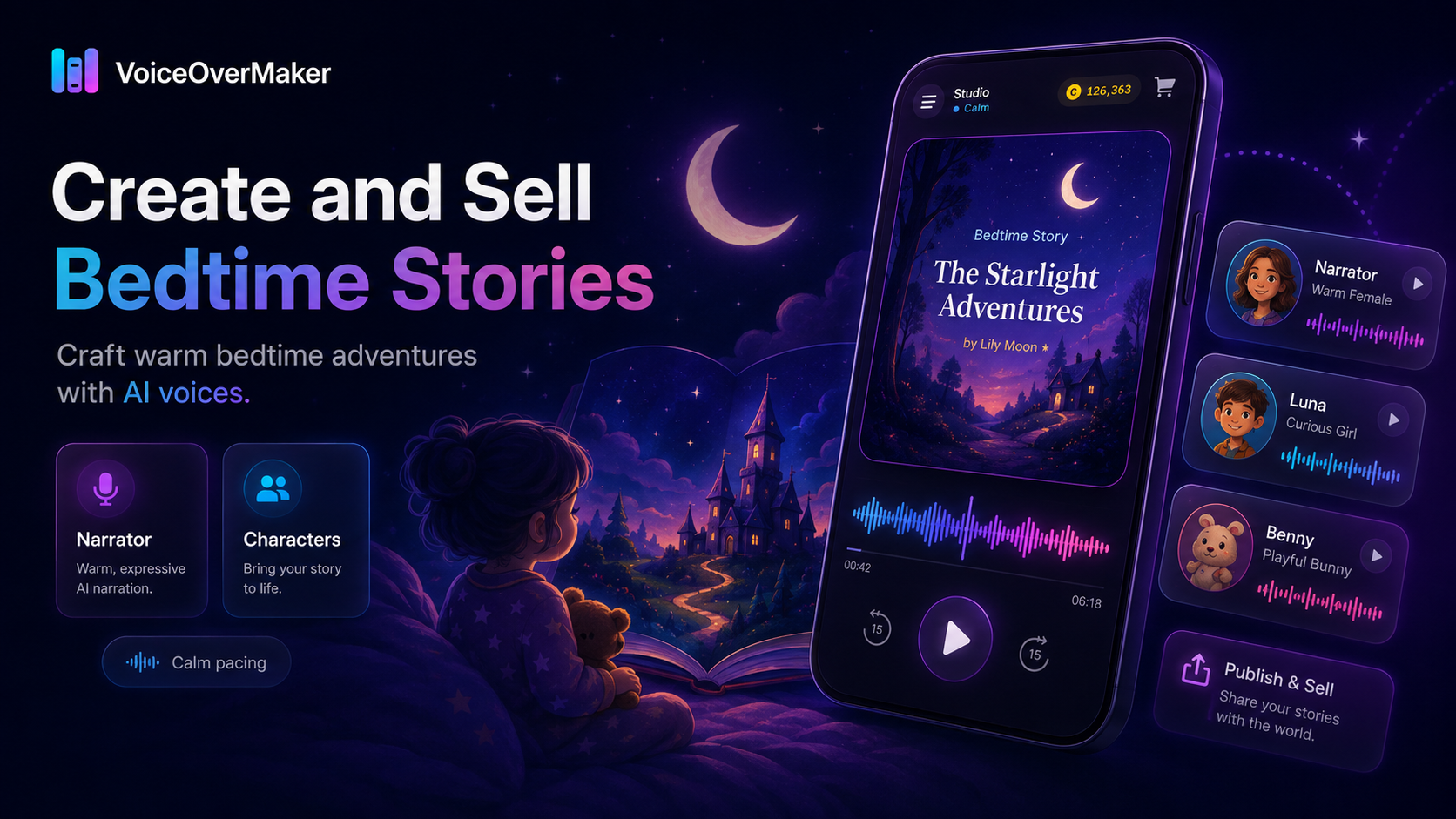
Bedtime stories are naturally suited to audio. The listener is not staring at a screen. The narrator's rhythm matters. Pauses matter. Warmth matters. A recurring character can become familiar, and a series can become part of a family's evening routine.
That makes bedtime storytelling an interesting format for writers, parents, educators and independent creators who want to experiment with original audio.
AI voice tools can help with production, but the product still begins with something technology cannot replace: a story worth hearing.
Start With a Clear Age Group
"Children" is too broad an audience. A story for a three-year-old should not be written like a story for a ten-year-old.
Before writing, define:
- Approximate age range
- Story length
- Vocabulary level
- Emotional intensity
- Lesson or theme
- Whether the story is relaxing or adventurous
- Whether a parent is expected to listen too
Choose a Repeatable Story Concept
Instead of creating unrelated stories forever, build a world you can revisit. Examples:
- "The Sleepy Space Club" — each episode visits one gentle planet
- "Milo's Moving Map" — a magical map opens a new adventure in every story
- "The Midnight Library" — a different book comes alive each evening
- "Luna and the Little Lighthouse" — quiet coastal stories about curiosity, courage and kindness
These examples illustrate a business advantage of original intellectual property: one strong concept can become a series.
Build a Simple Bedtime Story Structure
A useful structure is:
Familiar beginning → Small mystery or challenge → Gentle adventure → Safe resolution → Calm ending
For sleep-oriented stories, the emotional curve should usually settle near the end rather than finish with maximum excitement.
Cast a Narrator First
The narrator is the emotional anchor. For a bedtime story, consider a voice that feels: warm, clear, patient, reassuring, natural at slower pacing.
Generate a short test scene before committing to the whole story. A technically excellent voice can still be wrong for the atmosphere you want.
Add Character Voices Selectively
Multi-character narration can make a children's story easier to follow and more memorable. But avoid turning every minor character into a new actor. Too many voices can become distracting. For guidance on casting multiple voices effectively, see multi-character audiobook AI voice casting.
Use Delivery to Create Calm
Bedtime audio is a performance. Consider:
- Slightly slower pacing
- Short pauses after important moments
- Gentle emphasis
- Quieter endings
- Consistent volume
- Avoiding abrupt emotional jumps
VoiceOverMaker's page and block controls can help you shape individual sections differently. A mysterious moment may use a curious or dramatic delivery. The final paragraph may use calm delivery and a slower ending.
Create Episodes at a Manageable Length
There is no universal perfect bedtime-story duration. Instead, choose a length you can produce consistently. A creator might experiment with:
- Very short mini-stories (under 5 minutes)
- 5–10 minute episodes
- 10–20 minute narrated adventures
- Themed collections
- Longer chapter-based stories
Build a Recognizable Series Identity
A child or parent should recognize your story before reading the entire description. Keep selected elements consistent:
- Series name
- Logo or title typography
- Cover style
- Recurring characters
- Narrator
- Story tone
- Approximate duration
Ways Bedtime Stories Can Be Packaged
An original bedtime-story catalog can become several formats:
- Individual audiobooks
- Story collections
- Ebook + audio bundles
- Subscriber library
- Video storytelling (pair narration with original illustrations)
- Podcast discovery
For a full breakdown of where you can list finished audiobooks, see where to sell AI-narrated audiobooks.
Can Bedtime Stories Become a Business?
They can become a product category, but that is different from guaranteed income. The commercial opportunity comes from building something people choose to return to.
That requires: original stories, consistent production, strong covers, appropriate metadata, audience trust, discoverability, a catalog, and regular improvement. For a deeper look at the business side, read our guide on how to make money with AI audiobooks.
A Better Creator Workflow
Try this approach:
- Story 1 — Prototype: Write one original story and produce it completely
- Story 2 — Improve: Use feedback from the first production to refine narration, pacing and cover style
- Stories 3–5 — Establish the Series: Keep the successful elements consistent
- Collection 1 — Bundle: Once the stories form a coherent set, consider a collection
- Next — Expand: Create another theme, age bracket or language version only after the first workflow feels repeatable
Important Safety and Rights Considerations
For children's content, quality and responsibility matter. Avoid:
- Copying existing children's characters
- Imitating copyrighted franchises
- Using artwork without permission
- Misleading health or educational claims
- Presenting unsafe activities as harmless
- Creating frightening content for an age group that expects calming bedtime material